The recalled alfalfa seed lot SAL2-24JB (expiration date of 12/31/2029) should not be sold, used, or distributed. Sprout growers should check their inventory for this recalled seed lot and discard any remaining seed. Recalled sprouts grown from the recalled alfalfa seed lot are past their best-by dates and should no longer be available for sale.
Do not use or sell recalled sprouting seeds.
Check your refrigerators and freezers for recalled seeds or sprouts and throw them away or return the product to the place of purchase. If you froze a product without the original packaging and can’t tell if it’s part of the affected sprouts, throw it away.
Consumers, restaurants, retailers, sprout growers, and foodservice customers who purchased or received recalled seeds or sprouts, including wholesale products, should carefully clean and sanitize any surfaces or containers that they touched. Follow FDA’s safe handling and cleaning advice to reduce the risk of cross-contamination.
Retailers that received recalled seeds or sprouts and repackaged them for individual sale should not sell them and should remove the products from the market.
Consult your health care provider immediately if you ate recalled sprouts and have any symptoms that resemble an STEC or Salmonella infection.
November 9, 2026
The FDA and CDC, in collaboration with state and local partners, investigated a multistate outbreak of Shiga toxin-producing E. coli (multiple serotypes include: O26:H11, O103:H25, O168:H8) and Salmonella Agona infections linked to recalled alfalfa seed lot SAL2-24JB.
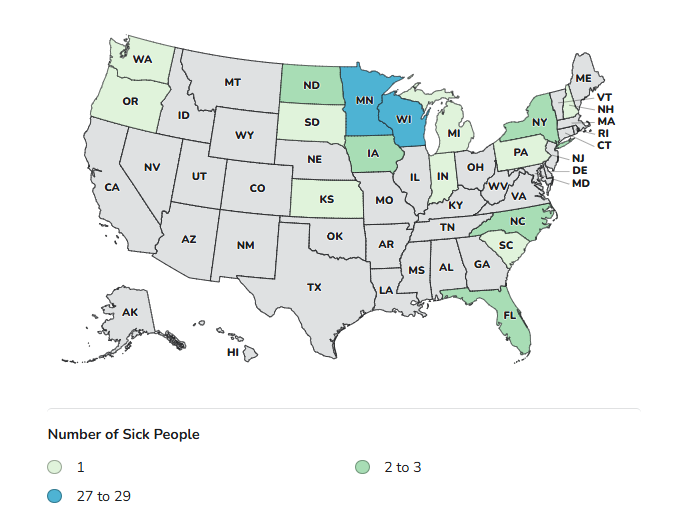
As of November 9, 2026, CDC has declared the outbreak over. Based on epidemiological information collected by CDC and state partners, a total of 77 people infected with multiple strains of Shiga toxin-producing E. coli and one strain of Salmonella have been reported from 16 states. Some people were infected with more than one outbreak strain. Sixty-four people were infected with E. coli, 10 people were infected with Salmonella, and 3 people were infected with both Salmonella and E. coli.
Illnesses started on dates ranging from May 31, 2026, to October 19, 2026. State and local public health officials are interviewing people about the foods they ate in the week before they got sick. Of the 52 people interviewed, 41 (79%) reported eating sprouts; 36 specified eating alfalfa sprouts. There have been 6 hospitalizations, and no deaths have been reported.
The recalled alfalfa seed lot SAL2-24JB should no longer be available for sale; however, the recalled lot has an expiration date of 12/31/2029. Sprout growers should check their inventory for any remaining product and consumers should check their homes for recalled products and throw them away. Do not use or distribute the recalled seed and throw it away. If you are unsure if your seed lot is part of the recall, contact your seed supplier.
Recalled sprouts grown from the recalled alfalfa seed lot are past best-by dates and should no longer be available for sale.
FDA’s outbreak investigation is complete.
Consumers who have symptoms should contact their health care provider to report their symptoms and receive care.
To report a complaint or adverse event (illness or serious allergic reaction),visit Industry and Consumer Assistance.
Follow us on X (formerly Twitter)